

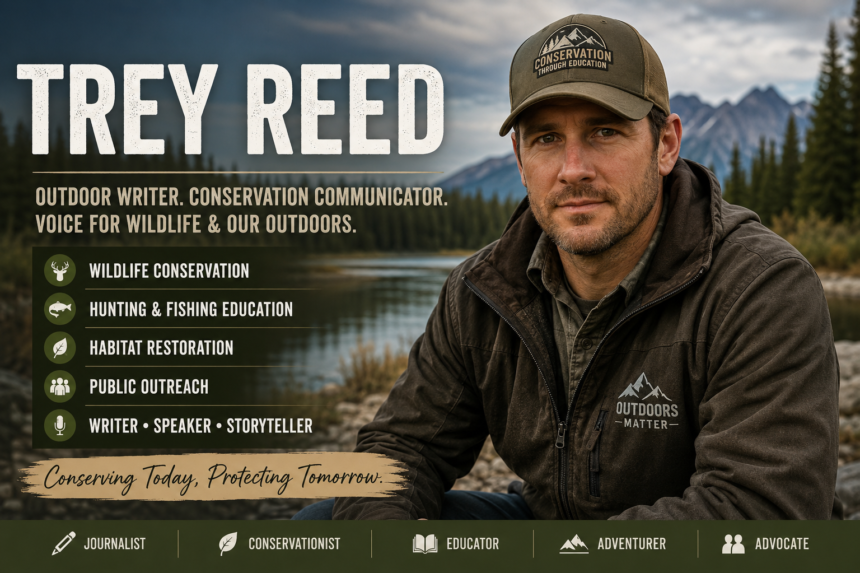
Trey Reed
Trey Reed is best known as an American outdoor writer, conservation communicator, and public affairs professional who has built a respected reputation through wildlife journalism, hunting education, fishing advocacy, and natural resource conservation. Over the years, his work has reached thousands of readers through magazines, newspapers, radio, podcasts, and state conservation programs.
If you’re searching for Trey Reed, you’re likely looking for accurate information about his professional background, his contributions to outdoor journalism, and the impact he has made in conservation. This guide brings everything together in one place using verified public information and expert analysis.
Quick Facts About Trey Reed
| Feature | Details |
|---|---|
| Full Name | Trey Reed |
| Profession | Outdoor Writer, Conservation Communicator, Public Affairs Professional |
| Known For | Wildlife conservation, hunting and fishing journalism |
| Industry | Outdoor Media & Natural Resources |
| Expertise | Conservation policy, wildlife management, outdoor recreation |
| Primary Topics | Hunting, Fishing, Wildlife, Public Lands |
| National Recognition | Outdoor publications, radio, podcasts, conservation education |
| Career Focus | Educating the public about responsible outdoor recreation |
Who Is Trey Reed?
Trey Reed has earned recognition as one of the respected voices in American outdoor communications. His work centers on explaining wildlife conservation, hunting traditions, fishing opportunities, habitat restoration, and public access to natural resources.
Unlike many media personalities who focus only on entertainment, Reed combines journalistic storytelling with scientific information. His articles frequently explain how wildlife agencies manage game populations, why habitat restoration matters, and how outdoor recreation contributes to conservation funding.
That balance has helped him develop credibility among hunters, anglers, conservation groups, and general outdoor enthusiasts.
Trey Reed’s Professional Background
Throughout his career, Trey Reed has worked in several areas of outdoor communication.
His experience includes:
- Outdoor journalism
- Wildlife education
- Public affairs
- Conservation communication
- Radio broadcasting
- Podcast hosting
- Government communications
- Public outreach
This diverse background allows him to explain complicated environmental topics in language that everyday readers understand.
Rather than focusing on sensational headlines, he typically emphasizes education, responsible stewardship, and factual reporting.
Career Journey of Trey Reed
Like many respected outdoor writers, Trey Reed developed expertise through years of direct experience rather than overnight popularity.
His career has included work involving:
- Wildlife agencies
- Outdoor publications
- Public information campaigns
- Conservation organizations
- Hunting education
- Fishing awareness
- Environmental communication
These experiences have given him firsthand exposure to wildlife management practices across the United States.
That practical knowledge appears throughout his writing.
Why Trey Reed Is Well Known in Outdoor Journalism
Outdoor journalism differs from traditional news reporting.
Writers in this field must understand:
- Wildlife biology
- Conservation law
- Hunting regulations
- Fishing management
- Public lands
- Environmental policy
- Outdoor ethics
Trey Reed has consistently demonstrated knowledge across these subjects.
Readers appreciate articles that explain why regulations exist rather than simply reporting them.
This educational style builds trust over time.
Areas of Expertise
One reason many people search for Trey Reed is the wide variety of outdoor subjects he covers.
His expertise commonly includes:
Wildlife Conservation
Healthy wildlife populations require scientific management.
Reed often discusses habitat protection, population monitoring, migration patterns, and conservation funding.
Hunting Education
Responsible hunting remains an important conservation tool in North America.
His work frequently explains:
- Hunter safety
- Ethical hunting
- License systems
- Wildlife management
- Harvest regulations
Fishing
Fishing content often includes:
- Species management
- Aquatic habitats
- Seasonal conditions
- Public fishing opportunities
- Conservation practices
Public Lands
Many of his discussions focus on public access, outdoor recreation, and protecting natural resources for future generations.
Writing Style That Builds Credibility
A major strength of Trey Reed’s work is clarity.
Complex conservation issues can become confusing.
Instead of overwhelming readers with scientific terminology, he explains:
- Why wildlife populations change
- How habitat restoration works
- Why regulations differ between regions
- How conservation funding supports wildlife
That practical approach helps readers better understand outdoor policy.
Conservation Philosophy
Many outdoor communicators simply report news.
Trey Reed often goes a step further by explaining the connection between conservation science and recreational opportunities.
His work highlights how responsible management benefits:
- Hunters
- Anglers
- Wildlife watchers
- Local communities
- Tourism
- Future generations
That broader perspective makes his writing valuable even for readers who do not hunt or fish.
The Importance of Science in His Work
Modern wildlife management relies heavily on research.
Topics commonly discussed include:
| Conservation Area | Why It Matters |
| Population Surveys | Prevent overharvest |
| Habitat Restoration | Improves biodiversity |
| Water Quality | Supports fisheries |
| Controlled Hunting | Maintains balanced populations |
| Public Education | Encourages ethical recreation |
| Species Monitoring | Protects vulnerable wildlife |
| Conservation Funding | Supports habitat projects |
| Outdoor Access | Expands recreation opportunities |
Scientific data provides the foundation for many of these discussions.
That evidence-based approach improves public understanding.
Public Communication and Outreach
Communicating science to the public is difficult.
Government reports often contain technical language.
Trey Reed serves as a bridge between researchers and everyday outdoor enthusiasts.
Instead of publishing complicated data, he explains:
- What happened
- Why it matters
- How it affects hunters
- What anglers should know
- Future conservation implications
Readers appreciate straightforward explanations.
Contributions Beyond Writing
His influence extends beyond printed articles.
Public communication today includes multiple platforms, including:
- Podcasts
- Interviews
- Radio programs
- Public presentations
- Educational campaigns
- Conservation awareness events
Using different formats allows information to reach wider audiences.
Why Outdoor Journalism Matters
Outdoor journalism performs several important functions.
It informs.
It educates.
It preserves traditions.
Quality reporting also helps correct misinformation about wildlife management.
Articles covering conservation policies often explain decisions that may otherwise appear controversial.
Understanding the science behind those decisions improves public trust.
Lessons Readers Can Learn from Trey Reed’s Work
Several recurring themes appear throughout his professional work.
1. Conservation Requires Participation
Wildlife protection depends on public involvement.
Hunters, anglers, volunteers, researchers, and conservation organizations all contribute.
2. Education Improves Outdoor Ethics
Knowledge encourages responsible behavior.
That benefits wildlife and outdoor communities alike.
3. Science Should Guide Policy
Management decisions based on biological research generally produce healthier ecosystems.
4. Outdoor Recreation Supports Conservation
License fees and related funding often finance habitat restoration, research, and wildlife management programs.
Common Topics Associated with Trey Reed
Readers frequently encounter discussions involving:
- Wildlife conservation
- Deer management
- Waterfowl
- Turkey hunting
- Fisheries
- Habitat restoration
- Outdoor education
- Hunting ethics
- Conservation funding
- Public lands
- State wildlife agencies
- Outdoor recreation
- Natural resources
- Environmental stewardship
These related subjects strengthen the broader understanding of his work.
Why People Continue Searching for Trey Reed
Interest remains steady because his work intersects several growing topics.
These include:
- Sustainable wildlife management
- Conservation policy
- Outdoor recreation
- Hunting regulations
- Fishing opportunities
- Environmental education
People often seek trustworthy explanations rather than opinions.
Experienced communicators help fill that need.
How Trey Reed Has Built Professional Trust
Trust develops slowly.
Several factors contribute to professional credibility.
These include:
- Consistent reporting
- Educational content
- Respect for scientific research
- Practical outdoor experience
- Clear communication
- Long-term involvement in conservation topics
These qualities have helped establish Trey Reed as a respected figure within outdoor communications.
The Future of Outdoor Conservation Communication
Outdoor communication continues evolving.
Digital platforms now allow conservation professionals to reach audiences through articles, podcasts, videos, newsletters, and social media.
The need for factual reporting remains high.
As wildlife management becomes more complex due to changing habitats, climate pressures, invasive species, and increased recreation, communicators with practical expertise will continue playing an important role.
That makes educational voices like Trey Reed increasingly valuable for both experienced outdoorsmen and newcomers.
Expert Verdict: Why Trey Reed Remains an Influential Voice
Trey Reed has built a reputation through knowledge, consistency, and public education rather than short-term popularity. His work reflects a deep understanding of wildlife conservation, responsible hunting, fishing, and natural resource management. By translating scientific research into practical guidance, he helps readers understand how conservation decisions affect both ecosystems and outdoor recreation.
For anyone researching Trey Reed, the key takeaway is that his influence comes from years of trusted communication and a commitment to explaining complex environmental topics with clarity. That combination continues to make his work relevant to hunters, anglers, conservation professionals, and anyone interested in the future of America’s natural resources.
Frequently Asked Questions
Who is Trey Reed?
Trey Reed is an American outdoor writer, conservation communicator, and public affairs professional recognized for his work covering wildlife management, hunting, fishing, and natural resource conservation.
What is Trey Reed known for?
He is widely known for educating the public about wildlife conservation, responsible outdoor recreation, hunting ethics, fishing, and environmental stewardship through journalism and public communication.
Does Trey Reed write about conservation?
Yes. Conservation is one of the central themes of his work. He frequently discusses habitat restoration, wildlife science, sustainable management practices, and public education.
Why is Trey Reed respected in outdoor journalism?
His reputation comes from combining practical outdoor experience with factual reporting and a science-based approach. Readers value his ability to explain complex conservation issues in a clear and balanced way.
Why do people search for Trey Reed?
People commonly search for Trey Reed to learn about his career, read his outdoor writing, understand his role in conservation communication, and find reliable information about hunting, fishing, and wildlife management.