

Introduction
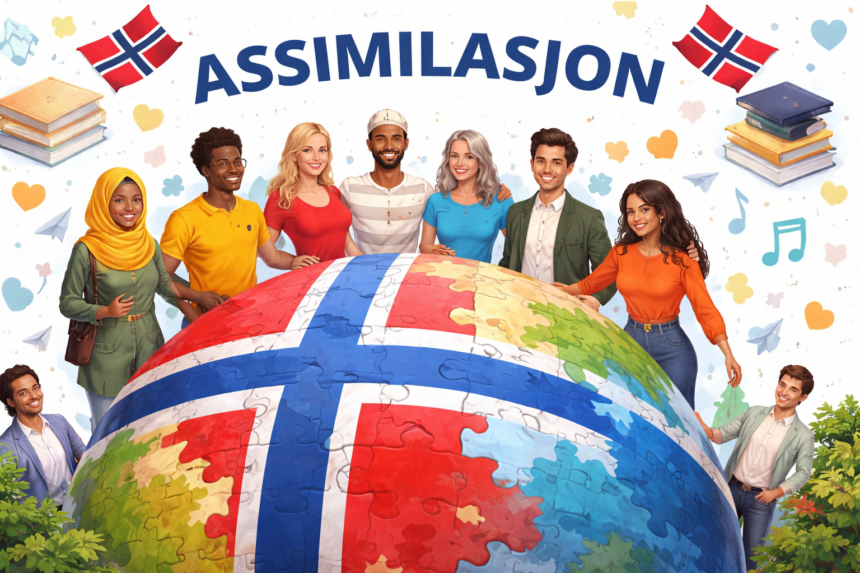
Imagine stepping into a completely new environment—new language, unfamiliar customs, different traditions, and people who see the world through a lens you’ve never experienced before. Sounds overwhelming, right? Yet millions of people go through this process every year. Somewhere along the way, they begin adapting, learning, and gradually becoming part of their new surroundings. That fascinating transformation is often described as Assimilasjon.
- Introduction
- What Does Assimilasjon Mean?
- A Brief History of Assimilasjon
- Why Assimilasjon Matters in Modern Society
- Assimilasjon vs. Cultural Diversity
- Stages of the Assimilasjon Process
- Benefits of Assimilasjon
- Challenges and Criticism
- How Individuals Navigate Assimilasjon
- Assimilasjon in the Digital Age
- Frequently Asked Questions (FAQs)
- What does Assimilasjon mean?
- Is assimilation the same as integration?
- Does assimilation always happen voluntarily?
- Can someone maintain their culture while assimilating?
- Why is Assimilasjon still relevant today?
- Conclusion
Now, you might be wondering—what exactly does Assimilasjon mean? Is it about losing one’s identity, or is it about finding a place within a broader community? Well, truth be told, the answer isn’t black and white. The concept of assimilation has sparked debates, shaped societies, and influenced cultures for centuries.
In today’s globalized world, where migration, cultural exchange, and digital communication connect people across continents, the idea of Assimilasjon feels more relevant than ever. Some see it as a natural part of social integration, while others worry about the potential loss of cultural heritage.
So let’s unpack this intriguing concept. In the sections ahead, we’ll explore the meaning of Assimilasjon, its historical roots, its role in modern society, and the challenges and opportunities it brings. Along the way, we’ll also discuss how individuals and communities navigate this complex yet fascinating process.
Ready? Let’s dive in!
What Does Assimilasjon Mean?
At its simplest, Assimilasjon refers to the process by which individuals or groups adopt aspects of another culture, usually the dominant one in a society. Over time, differences in language, traditions, and social behaviors may gradually fade as people adapt to their surroundings.
However, assimilation isn’t a single, straightforward event. Rather, it’s an evolving journey that unfolds over years—sometimes even generations.
For example, when someone moves to a new country, they might begin by learning the local language, adopting certain customs, or celebrating national holidays. Gradually, they become more integrated into the social fabric of their new home.
But here’s the kicker: assimilation doesn’t always mean abandoning one’s original culture entirely. Often, it involves blending elements from both worlds.
Key characteristics of assimilation include:
-
Cultural adaptation – learning and practicing new traditions or social norms
-
Language adoption – becoming fluent in the dominant language
-
Social integration – building relationships within the wider community
-
Economic participation – working and contributing within the new society
In essence, assimilation is about belonging—but the path to that sense of belonging can look very different for everyone.
A Brief History of Assimilasjon
The concept of assimilation has been around for centuries, especially in societies shaped by migration and colonization.
Throughout history, large groups of people have relocated—sometimes voluntarily, sometimes not. When these groups settled in new territories, they encountered unfamiliar cultures and social structures. Naturally, adapting became necessary for survival and stability.
For instance:
-
Immigrants arriving in the United States during the 19th and early 20th centuries often adopted American customs to integrate into society.
-
Indigenous communities in various parts of the world were historically pressured to assimilate into dominant cultures.
-
European countries experiencing waves of migration developed policies aimed at encouraging assimilation among newcomers.
Some of these efforts were voluntary and organic, while others were forced and controversial. Unsurprisingly, debates about assimilation continue today.
Why Assimilasjon Matters in Modern Society
Fast-forward to the present day, and the world is more interconnected than ever. Migration, international education, remote work, and global media all contribute to a dynamic exchange of cultures.
In this context, Assimilasjon plays an important role in shaping communities.
Here’s why assimilation matters:
-
Social cohesion
When individuals share certain cultural norms or communication styles, it becomes easier to build trust and cooperation. -
Economic opportunities
Learning the dominant language and cultural expectations often improves employment prospects. -
Community participation
Assimilation can encourage greater involvement in civic life, from voting to volunteering. -
Cross-cultural understanding
Through assimilation, individuals may gain deeper insights into multiple cultural perspectives.
However, it’s not always smooth sailing. The process can raise questions about identity, tradition, and fairness.
Assimilasjon vs. Cultural Diversity
One of the biggest debates surrounding assimilation is whether it strengthens or threatens cultural diversity.
Some people argue that assimilation promotes unity and reduces social barriers. Others believe it risks erasing valuable traditions and cultural identities.
So what’s the middle ground?
Many sociologists suggest that modern societies are moving toward cultural integration rather than complete assimilation. In other words, people can participate in the larger culture while still maintaining elements of their heritage.
Think about it:
-
Someone might speak the dominant language at work but use their native language at home.
-
Families may celebrate both traditional cultural holidays and national holidays.
-
Food, music, and art from different cultures become part of mainstream society.
Rather than replacing one culture with another, the result is often a rich cultural mosaic.
Stages of the Assimilasjon Process
Assimilation rarely happens overnight. Instead, it tends to unfold gradually through several stages.
1. Initial Exposure
At first, newcomers encounter unfamiliar customs, language barriers, and cultural differences. Everything feels new—and sometimes a little confusing.
2. Learning and Adaptation
Over time, individuals begin picking up local norms, phrases, and habits. They might adjust their communication style or adopt certain social practices.
3. Integration
Gradually, people feel more comfortable navigating their new environment. Friendships grow, opportunities expand, and daily life becomes easier.
4. Identity Balance
Eventually, many individuals find a balance between their original culture and their adopted one.
This stage often leads to bicultural identities, where people feel connected to both worlds.
Benefits of Assimilasjon
Despite the debates surrounding it, assimilation can offer numerous benefits for individuals and societies alike.
For individuals:
-
Greater access to education and employment
-
Improved communication within the community
-
Expanded social networks
-
Increased sense of belonging
For societies:
-
Stronger social unity
-
Economic growth through diverse contributions
-
Cultural exchange and innovation
-
Reduced misunderstandings between groups
Interestingly, some of the most creative ideas and innovations emerge from societies where cultural interaction is common.
Challenges and Criticism
Of course, the concept of assimilation isn’t without criticism. In fact, some critics argue that the process can place unfair pressure on minority groups.
Common concerns include:
-
Loss of cultural identity
When individuals feel compelled to abandon traditions, valuable cultural heritage may fade. -
Unequal expectations
Sometimes only minority groups are expected to adapt, while the dominant culture remains unchanged. -
Social exclusion
Even after assimilating, individuals may still face discrimination or barriers.
Because of these concerns, many modern policies aim to balance integration with respect for cultural diversity.
How Individuals Navigate Assimilasjon
The personal experience of assimilation varies widely. Some people embrace the process enthusiastically, while others approach it cautiously.
Here are a few strategies individuals often use to navigate assimilation successfully:
-
Learning the language as quickly as possible
-
Building relationships with people from different backgrounds
-
Maintaining cultural traditions within family or community circles
-
Staying open-minded toward new customs and ideas
It’s a delicate balancing act, but when done thoughtfully, it can lead to a rich and rewarding life experience.
Assimilasjon in the Digital Age
Interestingly, technology has added a new twist to the assimilation process.
Thanks to the internet, people can stay connected with their cultural roots while integrating into new societies.
For example:
-
Social media allows individuals to communicate with family across the globe.
-
Online communities help people celebrate cultural traditions together.
-
Streaming platforms bring international music, films, and literature to global audiences.
In this way, assimilation today doesn’t necessarily mean leaving one culture behind—it often means blending multiple identities.
Pretty fascinating, isn’t it?
Frequently Asked Questions (FAQs)
What does Assimilasjon mean?
Assimilasjon refers to the process in which individuals or groups adopt aspects of a dominant culture, often while adapting to a new social environment.
Is assimilation the same as integration?
Not exactly. Assimilation typically involves adopting the dominant culture more fully, while integration allows people to maintain elements of their original culture alongside participation in the broader society.
Does assimilation always happen voluntarily?
No. While many individuals choose to adapt naturally, historical examples show that assimilation has sometimes been encouraged—or even forced—through policies and social pressure.
Can someone maintain their culture while assimilating?
Absolutely. Many people successfully balance both identities, embracing aspects of the dominant culture while preserving their heritage.
Why is Assimilasjon still relevant today?
In an increasingly globalized world, people frequently move between cultures and societies. Understanding assimilation helps communities navigate these changes thoughtfully and respectfully.
Conclusion
The concept of Assimilasjon is far more complex than it might appear at first glance. It’s not simply about blending in or abandoning one’s roots—it’s about navigating the delicate intersection between identity, culture, and belonging.
Throughout history, assimilation has shaped societies, influenced migration patterns, and sparked countless conversations about diversity and unity. Today, in a world that’s more connected than ever before, these discussions remain just as important.
Ultimately, the story of assimilation is really the story of human adaptability. People learn, evolve, and grow as they encounter new environments and cultures. Sometimes the journey is challenging, sometimes exhilarating—but it always reveals something profound about the human experience.